
Research on lactic acid bacteria. Discovery of the GCL1815 strain.

●Research and Development at Glico

The Glico Group aims to realize “Healthier days, Wellbeing for life,” and is advancing activities to scientifically substantiate the creation of value in “Great Taste and Good Health” based on ingredients.
●Research on lactic acid bacteria
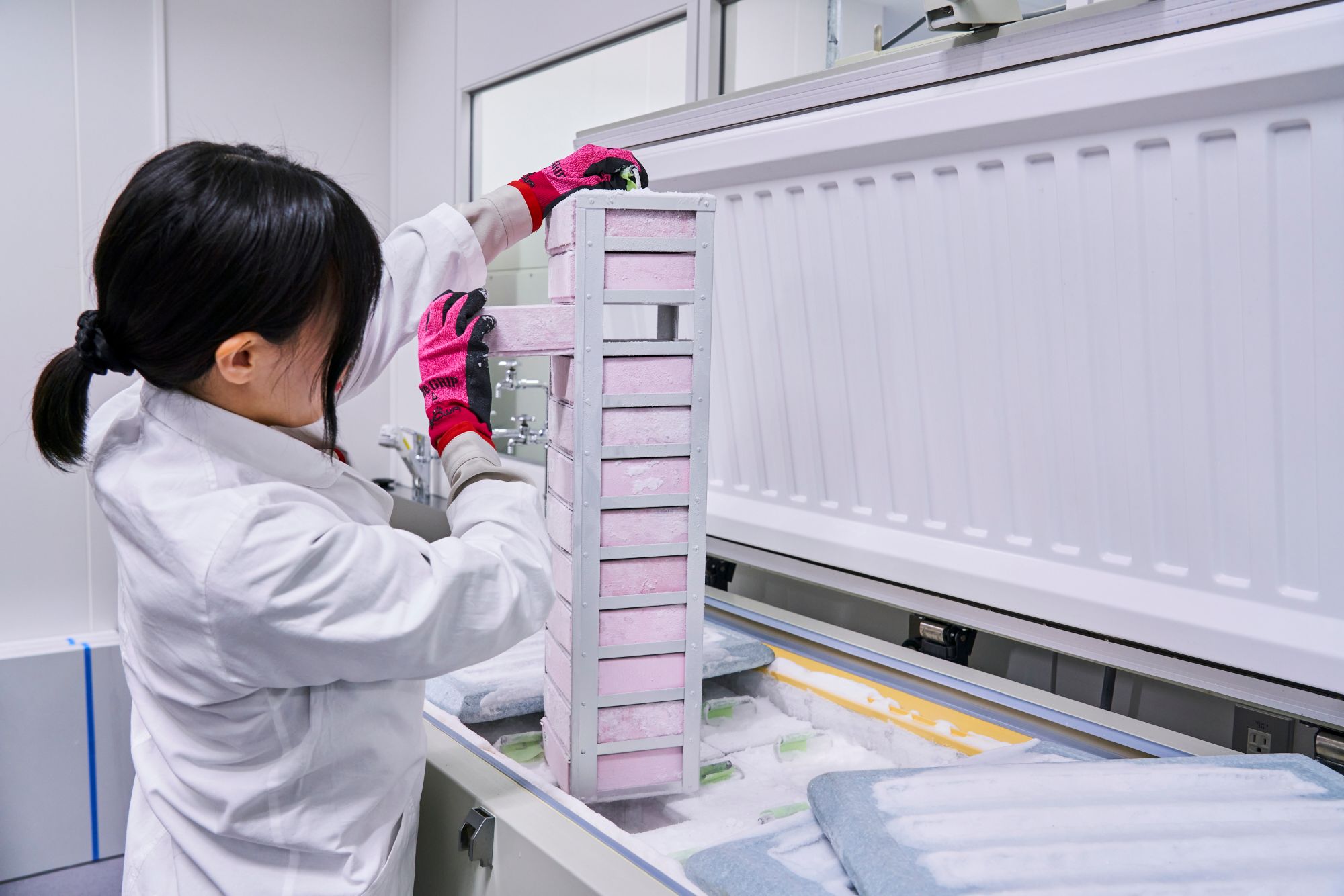
Lactic acid bacteria are microorganisms that break down carbohydrates to produce lactic acid. A wide variety of lactic acid bacteria include many beneficial bacteria that have positive effects on the human body, helping to improve the balance of intestinal microbiota and maintain healthy bowel function. Since the launch of its lactic-acid-bacteria-containing “Yogurt for Health” in 1969, Glico has continued research activities such as studies on flavors created through fermentation and the exploration of new strains of lactic acid bacteria. From around 2000, focusing on the immune functions of lactic acid bacteria, Glico has been advancing research into health functions that utilize components and metabolic systems of lactic acid bacteria.
We discovered Lactobacillus helveticus GCL1815, which enhances immune functions and contributes to the prevention of the onset of common colds.
■As a result of screening lactic acid bacteria using human-derived cells, the GCL1815 strain showed excellent results in all 3 of the evaluation criteria shown below.
• Ability to induce the production of immunoglobulin (Ig) A, a type of antibody that prevents infection by pathogens such as viruses and bacteria
• Ability to activate dendritic cells, which issue instructions to immune cells
• Ability to induce the production of interleukin (IL)-12, which regulates immune functions
■In a human study, it was confirmed that continuous intake of the GCL1815 strain for 8 weeks contributes to the prevention of the onset of common colds.
●Selection of Lactobacillus helveticus GCL1815 that enhances immune functions
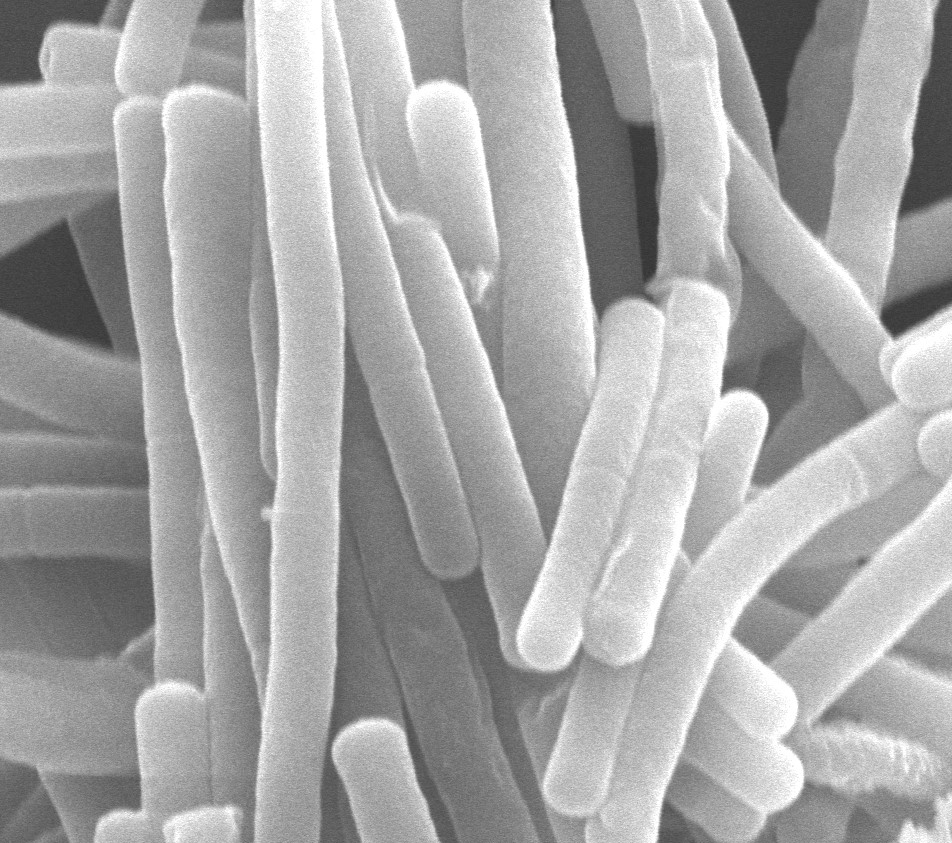
Electron micrograph of the GCL1815 strain
■Research overview
In search for immune health-promoting strains of lactic acid bacteria with high precision, we used 3 indicators of immune functions (1) induction of IgA production, (2) activation of dendritic cells, and (3) induction of IL-12 production to select the GCL1815 strain.
■Research method
From among approximately 10,000 strains collected by Glico, 308 lactic acid bacterial strains that represent various species used in foods and that grow well in standard lactic acid bacteria culture media were selected. Immune functions were evaluated using the following 3 criteria. Bacterial cells that were heat-sterilized were used for testing.
■Research results
1. High ability to induce IgA production
IgA is a type of antibody. The greater the amount of IgA produced, the higher the host’s ability to prevent infection by pathogens such as viruses and bacteria. The 308 lactic acid bacterial strains were co-cultured with human peripheral blood mononuclear cells (PBMCs), which are the cells that produce IgA, and the concentration of IgA produced in the culture medium was measured (enzyme-linked immunosorbent assay, ELISA). As a result, we identified the top 15 strains that showed high IgA production compared with the control group. Next, each of the 15 lactic acid bacterial strains was added to PBMCs obtained from volunteers’ blood, and IgA concentrations were measured in the same manner. Eight strains showed significantly higher IgA concentrations. In particular, the GCL1815 strain exhibited an IgA concentration nearly twice as high as that of the control group.
2. Marked ability to activate dendritic cells
Among dendritic cells, conventional dendritic cells (cDCs) have diverse functions, including instructing T cells to attack infected cells. Higher cDC activity indicates a greater likelihood that the proliferation of invading pathogens will be suppressed through the action of T cells.
The level of cDC activity was evaluated by the intensity of CD86 expression on cDC-like cells (cells experimentally prepared to have properties similar to cDCs). The intensity of CD86 expression when each of the 15 lactic acid bacterial strains selected in (1) was added was compared using a flow cytometer. Among the 15 strains, 13 showed significantly higher CD86 expression than the control group, and 5 strains, including the GCL1815 strain, exhibited expression levels at least 2-fold higher.
3. High ability to induce IL-12 production
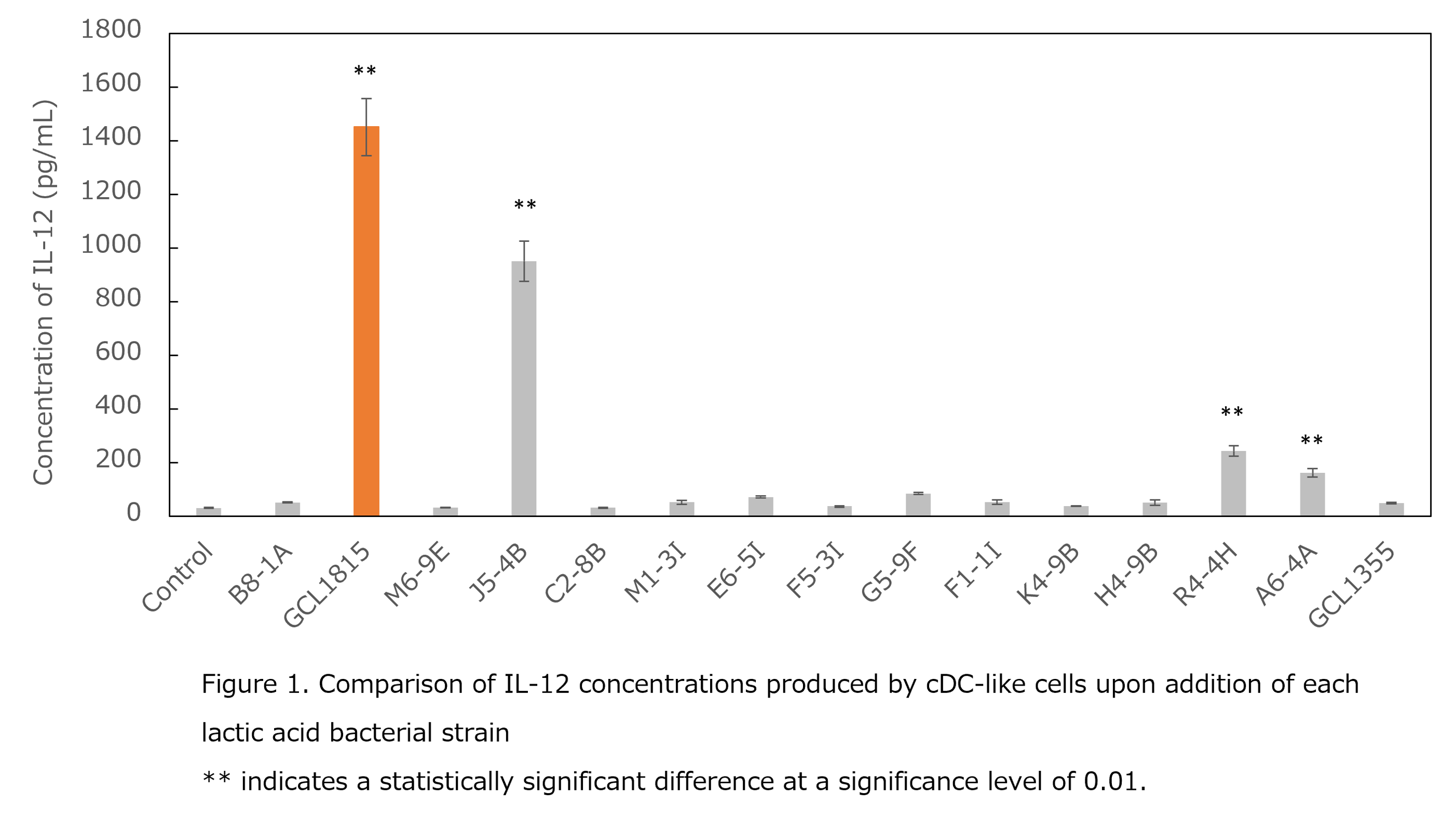
IL-12 is a type of protein known as a cytokine that regulates immune functions. As IL-12 issues signals that instruct NK cells and T cells to attack infected cells, higher production of IL-12 leads to more effective suppression of pathogen proliferation. The concentration of IL-12 produced by cDC-like cells upon the addition of each lactic acid bacterium was measured and compared using ELISA. As a result, the GCL1815 strain showed an IL-12 concentration significantly higher than that of the control group by at least 45-fold, and strongly induced IL-12 production (Figure 1).
Publication information of this research
Tsuruno K, et al. Screening of novel lactic acid bacteria with high induction of IgA production, dendritic cell activation, and IL-12 production. Biosci Biotechnol Biochem. Volume 89, Issue 3, March 2025, Pages 459–464.
●Verification of the preventive effect of the GCL1815 strain on the onset of common colds
■Study overview
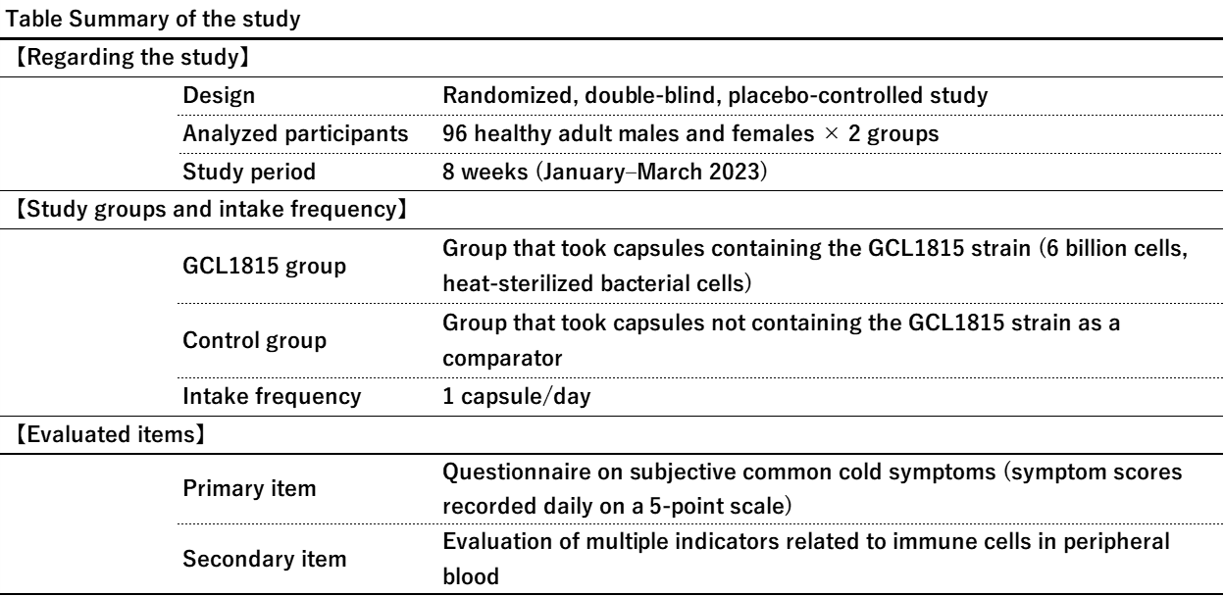
A human study was conducted with the aim of evaluating the effects of the GCL1815 strain on subjective common cold symptoms. Continuous intake of the GCL1815 strain for 8 weeks induced activation of 2 types of dendritic cells, suggesting a potential contribution to the prevention of the onset of common colds.
■Summary of the study
■Study results
1. Effect on common cold symptoms
The cumulative number of days with subjective common cold symptoms was significantly reduced. Out of the cumulative number of days during the study period (96 participants × 56 days = 5,376 days), the cumulative number of days on which participants reported having subjective common cold symptoms was 1,116 days in the control group, whereas it was 938 days in the GCL1815 group, showing a significantly lower result (p < 0.001, chi-square test).
Reduction in subjective common cold symptoms Evaluation of the cumulative number of days by symptom confirmed a significant reduction in the incidence of the following subjective common cold symptoms (p < 0.05, chi-square test). • Systemic symptoms: feverishness, fatigue, tiredness
• Site-specific symptoms: runny nose, nasal congestion, phlegm (sputum)
2. Evaluation of immune functions
The body is equipped with innate immunity, which defends against various foreign substances such as invading pathogens, and adaptive immunity, in which the body remembers specific foreign substances encountered over time and eliminates them. Dendritic cells regulate both innate and adaptive immunity. To clarify the effects on immune functions that may lead to a reduction in common cold symptoms, indicators reflecting activation of dendritic cells in the study participants were evaluated.
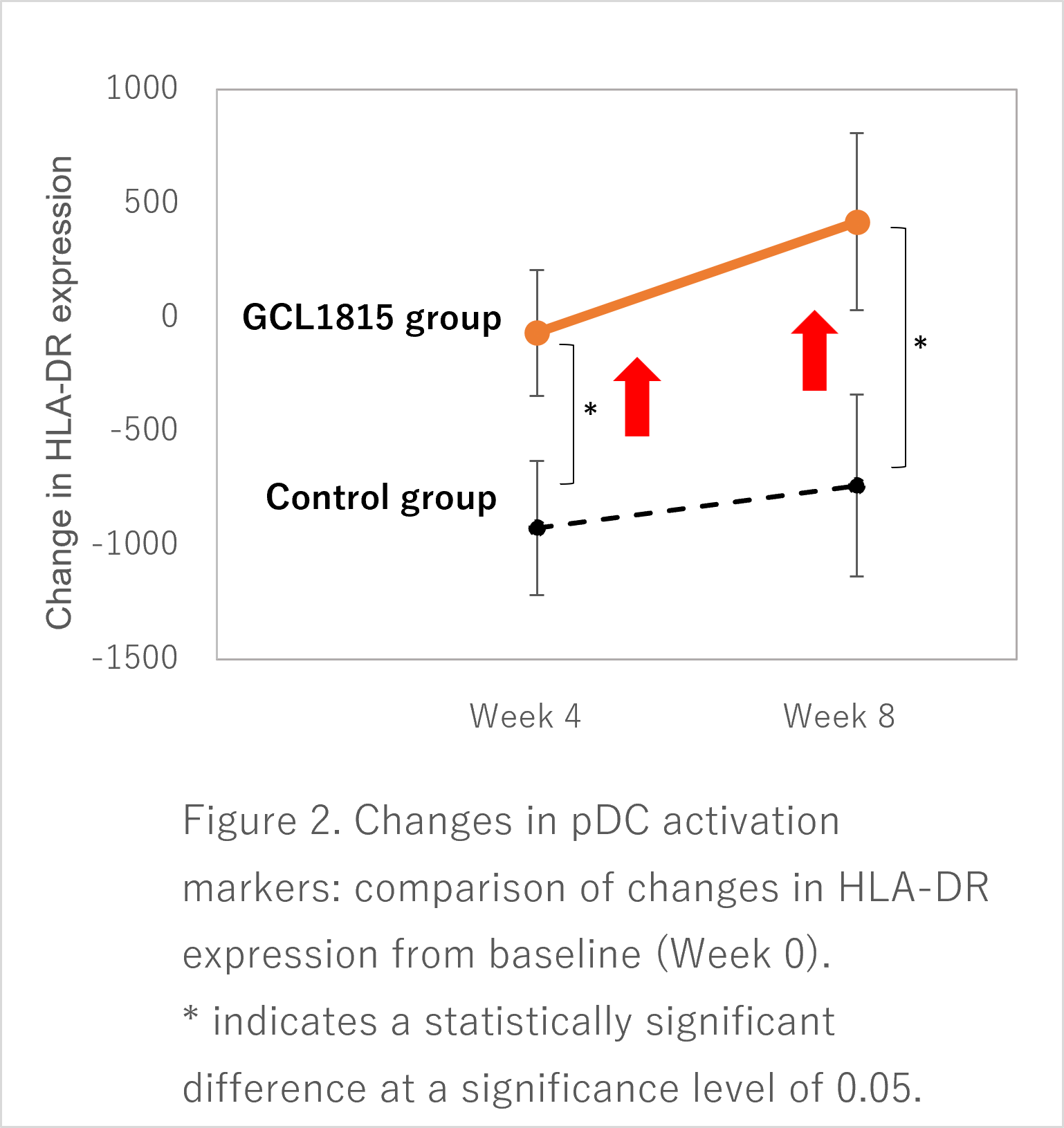
Activation of plasmacytoid dendritic cells (pDCs)
pDCs are known to produce large amounts of type I interferons (a type of cytokine) upon recognizing viruses, thereby inducing an antiviral state. In the GCL1815 group, at Weeks 4 and 8 of intake, the expression change in the pDC activation marker (HLA-DR) showed significantly higher values (Figure 2).
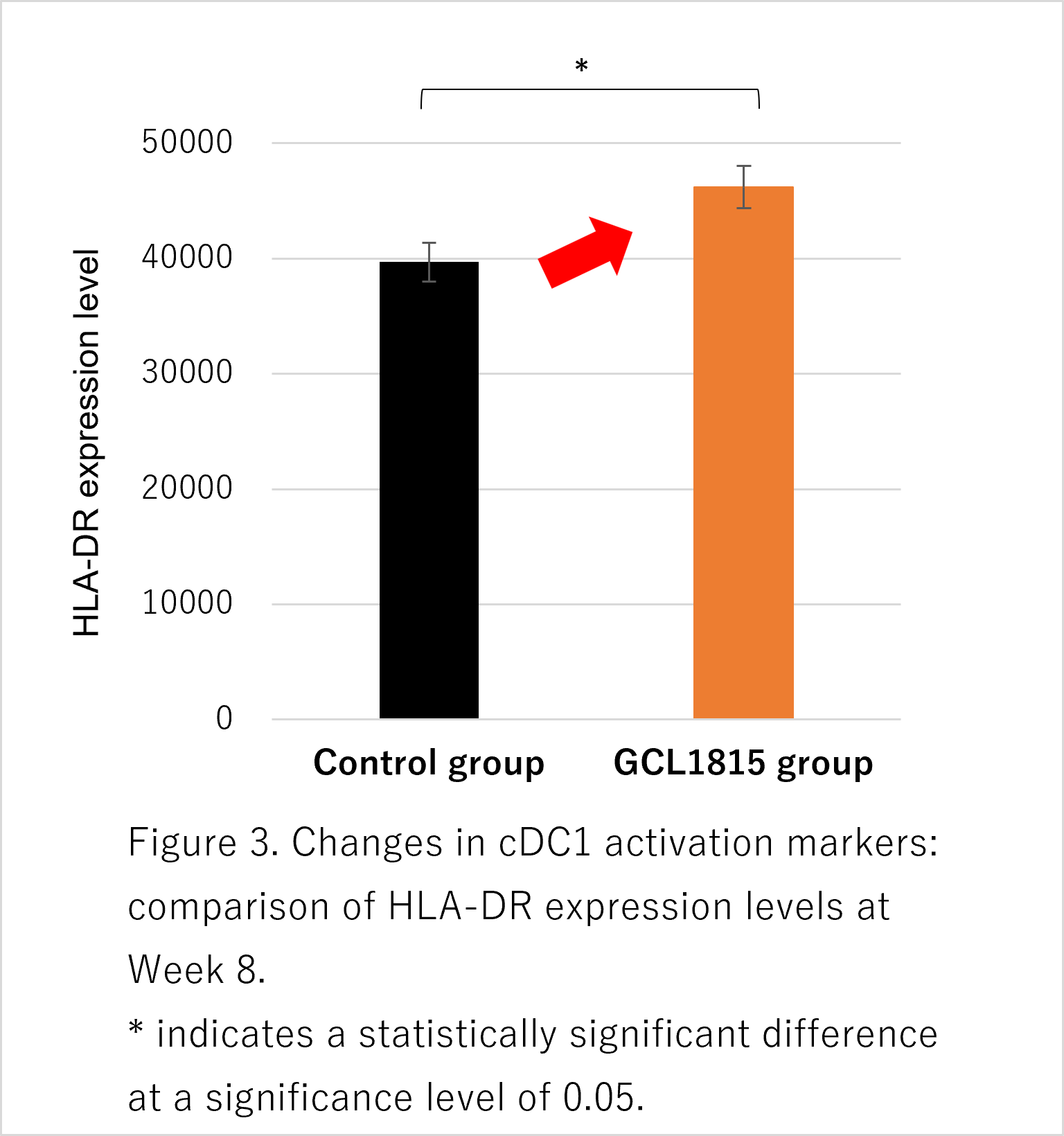
Activation of type 1 conventional dendritic cells (cDC1)
cDC1 are known to act on T cells and antibody-producing cells, ultimately promoting the elimination of virus-infected cells. In the GCL1815 group, at Week 8 of intake, the expression level of the cDC1 activation marker (HLA-DR) showed a significantly higher value (Figure 3).
Publication information of this study
Wada H, et al. Lactobacillus helveticus Induces Two Types of Dendritic Cell Activation and Effectively Suppresses Onset of the Common Cold: A Randomized, Double-Blind, Placebo-Controlled Trial. Nutrients. 2024, 17(1), 101.
